
Why You Should See Hamnet
Contains spoilers - a reflection on the need for catharsis in an unsettled world.

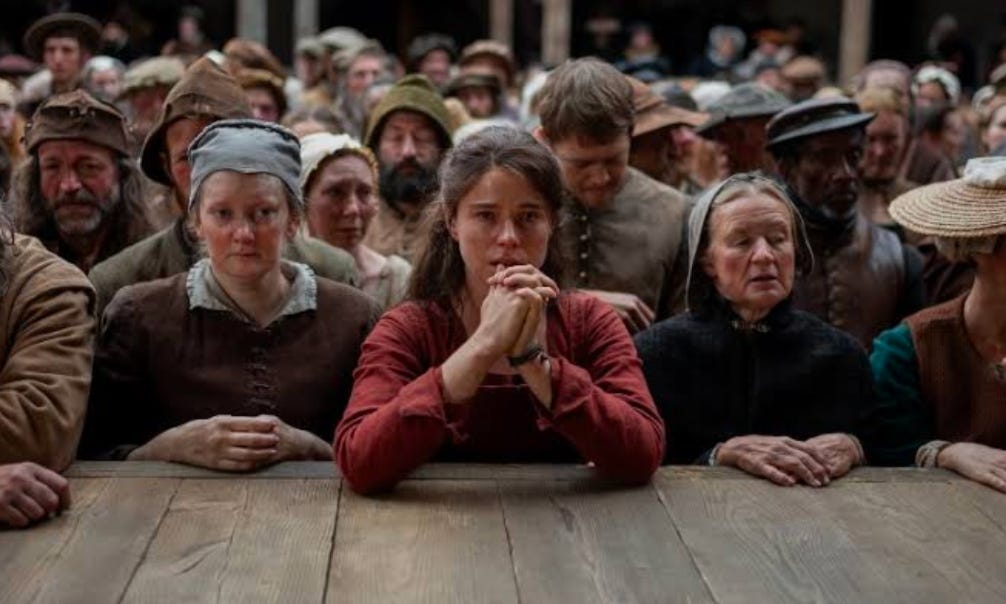
On Wednesday, I went to see Hamnet at my local cinema. My husband came with me, and I had an extra ticket, as my cousin was also meant to be coming along, but had to stay in London for work. I couldn't shift that extra ticket for love nor money. A few people wanted to see the film but couldn't take it at short notice for a midweek showing. Others stated a long-running aversion to either Paul Mescal or Jessie Buckley, the lead actors, or more specifically an aversion to Jessie Buckley’s overly effusive praise of Paul Mescal during her acceptance speeches for what must be the first of many, many awards the film will garner. And some people said, “It’s meant to be really sad, isn’t it? Yeah, no, sorry, I can't cope with that at the moment.”
And I get it. I really do. The world is a confusing and scary place these days; many friends of mine are experiencing their own health issues, and/or dealing with the health issues of their parents or children, or other variously stressful and horrible circumstances. Life can be tough enough these days, without vicariously experiencing other people’s (fictional) grief.
So, I ended up with a very comfortable double sofa seat (with actual cushions to clutch!) to myself, my husband had the single seat next to it with a separate table for his popcorn and drink, and we thoroughly enjoyed the experience of watching the film - grief included.
I don't think I am giving any spoilers here when I tell you that the film deals with the death of William Shakespeare’s young son Hamnet from the plague in the 1600s. The film is adapted from Maggie O'Farrell’s 2020 novel, which tells the story from the point of view of Agnes (Anne), Shakespeare's wife. So little is known of Shakespeare himself, let alone his family, that the majority of the plot details in both book and film are speculative. But that doesn't decrease the sense of real love, and real loss, that both book and film conjure for readers and viewers.
I have been a huge fan of Maggie O’Farrell since her earliest days as an author. My friend Ali and I used to trade copies of her books like precious jewels, discussing them endlessly and pressing them earnestly into the hands of others. The Vanishing Act of Esme Lennox has long been my go-to book to restore any flagging person’s reading mojo. And so there was some trepidation in seeing the film. Could it possibly be as good as the book?
My impression, having watched the film, is that it was like seeing an amazing tribute act to a band you’ve loved for years. It's not as good as seeing the actual band (because no film can ever be as good as the one that plays in your head as you read), but it hits all the right notes and leaves you with the same feelings. And, in the denouement, which I’ll explain, I think the film actually goes one better than the book.
The cinematography is excellent throughout. There is an authentically Tudor feel to both the interiors and exteriors of the houses (from the beautiful and practical potager kitchen garden to the light coming through the shutters or the straw-filled mattresses on the low, wide oak-beamed beds in the eaves). The opening scenes show Agnes curled up like a seed in a seed pod underneath the huge, gnarled roots of an ancient tree.
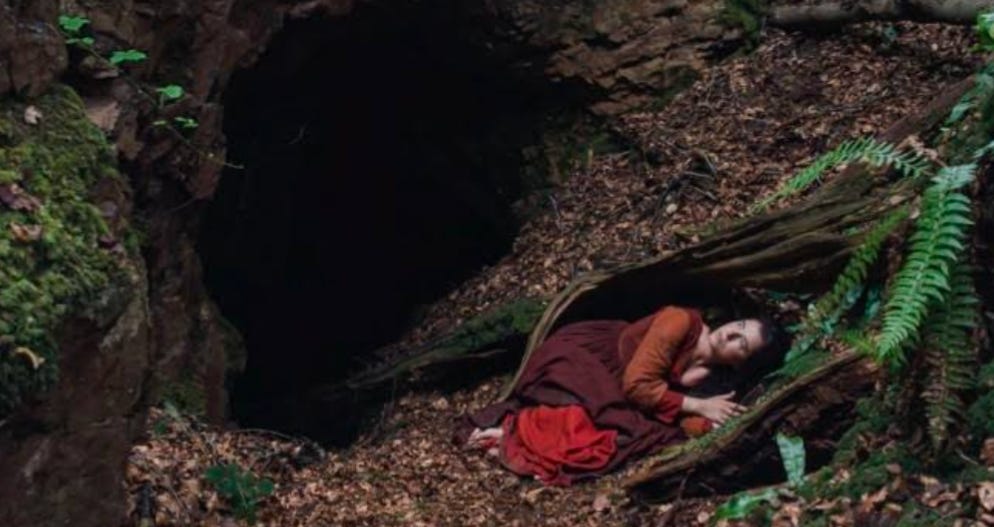
I knew immediately that the woodland scenes had been shot in The Forest of Dean (near where I lived till I was five) and I was pleased to have been correct in this when looking up the film locations afterwards. Agnes is a child of nature, wild and almost feral with her trained hawk and the knowledge of herbs passed to her by her hedge-witch mother. Jessie Buckley almost perfectly captures the Agnes of my imagination. Her initial interactions with Will, who has been hired as a Latin tutor to the family, strongly reminded me of the interplay between Benedick and Beatrice in Much Ado or Katherine and Petruchio in The Taming of the Shrew - and I’m sure this isn't coincidental.
The film made me appreciate something I hadn’t picked up as much when reading the book - the fact that Will can be loquacious on a surface level, but struggles to articulate genuine emotion - that is something he can only do when writing. Like many successful actors, he is essentially an introvert who needs time by himself, away from all distractions, in order to let his imagination fly on paper and feel regulated. Which, of course, he cannot do with the young and growing family he has with Agnes. No matter how much he loves them all, and he clearly does, he cannot thrive with them. Hence his frequent and increasingly lengthy departures to London.
The scenes where Agnes gives birth are pivotal. Her first baby is born under the trees where we first meet her, where she manages everything alone and is completely content. Her second labour occurs at a time when the Avon has burst its banks and she is unable to leave the house. This forced confinement infuriates her, and we see in flashback young Agnes seeing her own mother dead in childbirth and being unable to say a proper goodbye to her. However, the process brings her closer to Will’s mother (played with brilliant Puritan calmness and grit by Emily Watson) who helps her deliver the baby, a healthy boy, and then an unexpected twin sister, who is not breathing. The film and book show Agnes bargaining with fate (she lost her faith in God when her mother died) promising anything if her second daughter will only live. It was at this point in the film that I first started crying - because, having read the book, I knew how much that bargain would come back to haunt Agnes.
There are some very touching and naturalistic scenes with Jessie Buckley, Paul Mescal and the children as they develop and grow - the dialogue feels quite modern (there's a lot of “Ok” used, which I usually find quite jarring) but it serves to remind us that people in Tudor times were not a different species - they lived and loved needed money and worried about their children in the same ways that we do.
Judith, the younger twin, is in delicate health, whereas Hamnet is sturdy and robust. So when Judith suddenly comes down with symptoms of plague, everyone in the household panics. The twins have a habit of swapping roles and clothes to surprise and amuse (another very Shakespearean trope) and it is almost inevitable that in the middle of the night Hamnet rises from his bed, joins Judith by the fire, and offers to trick Death into taking his life for hers. That scene was the point in the book that made me cry the most, and it is extremely well played in the film. The scenes that come after, where Agnes tries everything she can to save her son and has to watch him struggle for breath until he dies, are harrowing and completely faithful to the book.
The rest of the story is about how both parents deal with the grief of losing a child. The novel focuses much more on Agnes's guilt (that the bargain she made to let Judith live has led to this, that with all her knowledge of medicinal plants she couldn't save him) and anger (that Will wasn't there when it happened). Cinema has the luxury of expanding the field of vision to Will himself - although the scene where he contemplates throwing himself in the Thames while reciting “To be or not to be” is possibly the weakest element in the film. Critics are very much divided on whether the writing of Hamlet was inspired by the death of Hamnet - but within this speculative narrative, it works.
Some critics have been very scathing about the final scenes of the film, where Agnes travels to London with her brother to see Hamlet being performed at The Globe. The film has been criticized for being emotionally manipulative, deliberately wringing tears from the audience in order to win awards.
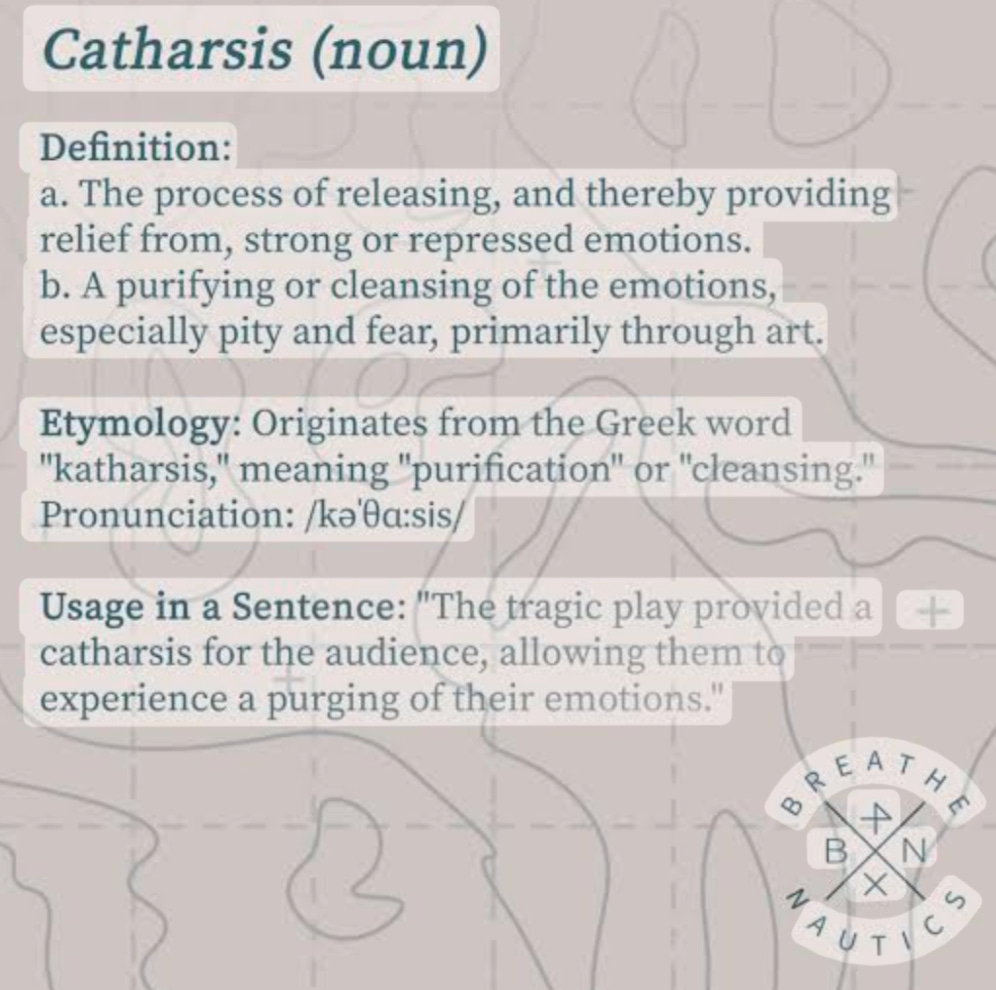
But audiences finding emotional release at the denouement of a tragedy is as old as theatre itself. I can remember first learning about catharsis during my Ancient History A Level unit about Greek theatre. It was Aristotle who first wrote about the power of catharsis, the emotional release experienced by audiences listening to music or watching a tragedy. In his Poetics, Aristotle was disagreeing with Plato, who thought that the emotions engendered by drama or music were negative, because they drew people away from the ideal state of rational and logical thought. Catharsis, however, was described by Aristotle as a refreshing and rebalancing of emotion. People who felt too much pity or fear could release or “purge” themselves of it by watching tragedy, and those who did not feel enough pity or fear could learn to practice exercising those emotions through responding to a hero’s tragic fall.
What makes the ending of the film so effective, in my view, is that the catharsis happens both on screen and in the cinema auditorium. Agnes, who has been suffering alone, unable to share her guilt, anger and pain with anyone, let alone her husband, and who has never been to the theatre before, has a moment of gradual realization at the end of the play that her emotions are being shared by all the audience members around her. As they watch the death of Hamlet on stage, they are united in grief. And at the same time, those of us watching in the cinema are experiencing our own personal and shared catharsis from both the Shakespearean tragedy and our understanding of Agnes’ journey. I had to suppress full on sobs until the credits had rolled, but I could hear that others around me were similarly affected. Individual catharsis, amplified by the catharsis of others around you, can be incredibly powerful and leave you feeling wrung out, but also refreshed.
Not all dramatists agree that catharsis is a good thing, however. Bertold Brecht, for example, deliberately withheld definitive endings from his plays, because he didn't want catharsis to send his bourgeois audiences home satisfied that they'd “felt something” - he wanted that anger and pity to remain, to be channeled into the social injustices they saw around them, and to spur them into action.
Watching Hamnet hasn't made me any less aware of the precarious state of the world. But it has made me think that Donald Trump should be made to watch it. He could do with a bit of emotional rebalancing. Don't you think?
thanks for sending me this on my p[age - I appreciate reading it, even if my experience was completely different! XX
Wonderful review, I have to see it now!....with our world under threat I think we could all do with an emotional release, a catharsis at the moment...